
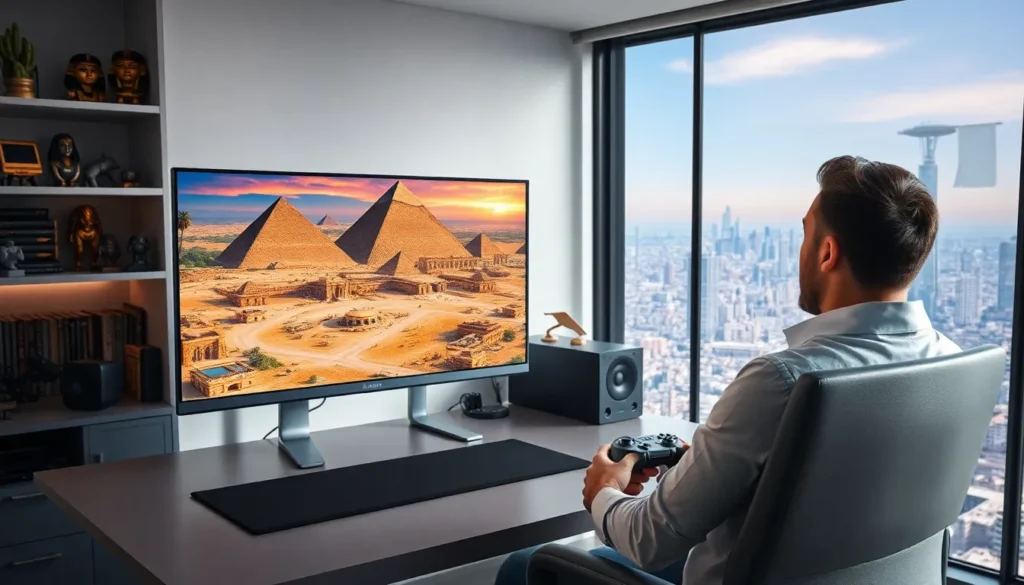
Step into the golden sands of Ancient Egypt with a game controller in hand. Picture this: dazzling pyramids, enigmatic pharaohs, and a world brimming with mythology explaining why cats should reign supreme. This gaming theme is more than just a pixelated backdrop: it’s a deep jump into history, culture, and creativity. So, fasten your seatbelt, if there’s an expedition to Ancient Egypt, you sure don’t want to miss it.
Exploring Ancient Egypt in Video Games
The Rich History and Culture of Ancient Egypt
The allure of Ancient Egypt is undeniable. Its history is filled with tales of grandeur, from the building of the pyramids to the fascinating lives of its gods and mortals. This captivating narrative serves as a fertile ground for video game designers eager to paint virtual worlds with rich historical textures. Players can wander through stunning recreations of temples, engage with complex hierarchies of power, and even interact with ancient relics that give a tip of the hat to true archaeological wonders.
Influence of Egyptian Mythology on Game Design
Egyptian mythology does more than just decorate gameplay: it influences plotlines and character development. Gods like Ra and Anubis often appear as powerful entities guiding or challenging players. These mythical narratives draw gamers into their stories while engaging with moral dilemmas based on ancient beliefs. By weaving elements of mythology into gameplay, developers can create deeper emotional connections, making players not just participants, but caretakers of ancient narratives.
Popular Video Games Featuring Ancient Egypt
Critical Analysis of ‘Assassin’s Creed Origins’
When the name “Assassin’s Creed Origins” surfaces, thoughts immediately race to the stunning fidelity of Ancient Egypt. Released in 2017, this installment immerses players in the bustling streets of Alexandria and the serene Nile River. Its dynamic open-world structure allows for exploration in ways that encourage curiosity. Clever storytelling enhances the experience, blending fiction with historical events. Players can not only engage in epic battles but also unearth secrets while befriending the creatures of this ancient realm.
Immersive World of ‘Pharaoh’ and Its Impact on Strategy Gaming
Back in the early 2000s, “Pharaoh” introduced gamers to the strategic depth of city-building within Ancient Egypt. Players could construct bustling cities along the Nile, manage complex economies, and even appease the gods to avoid disasters. This game left a lasting mark on strategy gaming, as players had to balance resource management with cultural and political factors. Its blend of challenge and creativity ensures its place in the annals of gaming history as a pioneer of the genre.
Unique Features of ‘Total War: Pharaoh’
Fast forward to the present, and “Total War: Pharaoh” has captured the strategic spotlight once again. This game ramps up the excitement with its combination of real-time tactics and turn-based strategy. Players command armies across historical landscapes, breathing life into ancient conflicts. What makes it particularly engaging? Its attention to detail in representing warfare tactics and cultural interactions of the time draws players in for what can only be described as epic in-classroom dramas, just without the pop quizzes.
The Aesthetic Appeal of Ancient Egypt in Gaming
Visuals and Soundtrack Inspired by Ancient Egypt
One cannot discuss Ancient Egypt in gaming without mentioning its iconic aesthetic. From the breathtaking visuals of desert landscapes to the detailed designs of architecture, the representation feels almost like wandering through a digital museum. Combine this with soundtracks filled with traditional instrumentation and the audience is transported to another time altogether. The symphonic layers echoing through vast temples create an immersive ambience that keeps players glued to the screen.
Cultural Symbols and Iconography in Games
The use of cultural symbols and iconography in video games isn’t just for show: it adds layers of meaning. Hieroglyphics, scarabs, and the ankh all tell stories that enrich gameplay. Such elements offer players a chance to decipher these symbols, transforming gaming into an educational experience. This engagement with cultural artifacts helps cultivate a respect for the history behind the myths, blending exploration with learning.
Community Engagement and Fan Contributions
Fan Art and Modifications Inspired by Ancient Egypt
Gaming communities continuously contribute to the popularity of Ancient Egypt through fan art and modifications. Talented artists bring iconic characters and scenes to life, showcasing their interpretations of ancient wonders. Mods can offer new gameplay elements, enhancing an already rich thematic experience. It’s exciting to see how fans engage, share, and extend the narrative beyond the developers’ original vision, creating a communal tapestry of creativity.
The Role of Online Communities in Sharing Knowledge
Online forums and social media platforms allow fans to dive even deeper into the lore of Ancient Egypt. Rich discussions can occur about historical accuracy, gameplay strategies, and personal experiences, connecting gamers across the globe. Sharing insights not only fosters a stronger community but also encourages newcomers to explore this rich theme. The sheer amount of knowledge exchanged ensures that players remain well-informed, enriching their overall experience.